Pooja Room Vastu: Direction, Placement and What to Do in a Flat
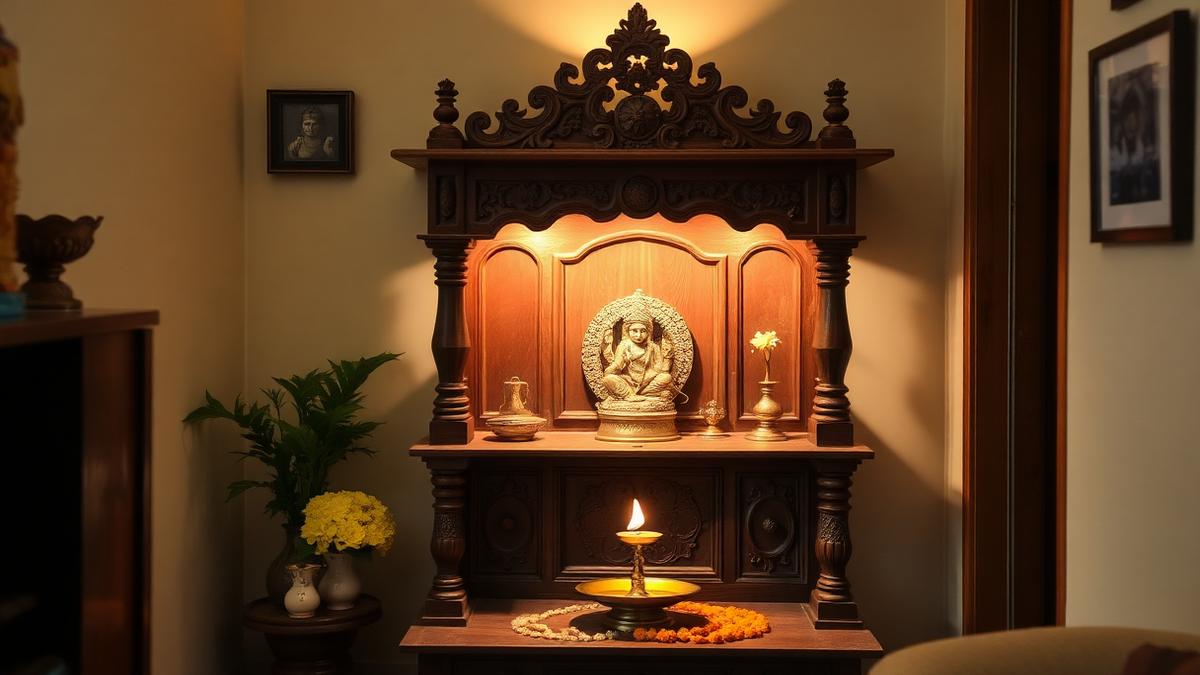
Vastu places the pooja room in the north-east, with the east and north as alternatives, and the person praying facing east or north. In a flat without a usable north-east, an east facing wall in a main room is the practical arrangement, kept clear of toilets and staircases.
Almost everyone asking about pooja room Vastu already knows the headline answer. The north-east is the zone. What they are actually trying to work out is what to do in a two bedroom flat where the north-east is a bathroom, or a balcony, or somebody else's wall.
This is the question we are asked in homes more than any other, and it deserves a longer answer than a direction.
Why the north east
In the classical grid the north-east is the zone kept light, clean and open. It is where water is placed, where open space is preferred, and where the plan is meant to be at its lowest and least loaded. A place of prayer sits in that logic naturally, and the association is consistent across regional schools in a way that many other placements are not.
The east and the north are the accepted alternatives, in that order. What is avoided is the south, and particularly the south-west, which is the heavy anchoring corner of the plan and is treated as the wrong character of space for this use.
Which way should you face
The person praying faces east or north. That is the part people get wrong more often than the room itself, because a mandir unit gets pushed against whichever wall has space rather than the wall that leaves the user facing the right way.
The idols themselves are usually placed so they face west or south, which is what allows the person in front of them to face east or north. This is where the common question about which direction god should face in the home comes from, and the answer follows from where the worshipper stands rather than being a separate rule.
A small point that gets missed. Idols are traditionally kept slightly off the floor and a little away from the wall behind them rather than flush against it.
The flat problem, which is most people's problem
A dedicated pooja room is a luxury of independent houses and larger apartments. In a compact flat you are choosing between imperfect options, and the useful skill is ranking them.
- A north-east corner of the living room, which is the closest thing to the classical position and works well with a wall mounted or freestanding unit.
- The north-east or east side of the master bedroom, acceptable where the living room offers nothing, and better kept behind a shutter or curtain.
- An east facing wall in any main room, which keeps the user facing east even if the zone is not ideal.
- A niche or an alcove in the north or east, which suits a compact mandir unit well.
- A kitchen shelf, which is common and which we treat as a last option rather than a solution.
What we ask people to avoid is more useful than what we ask them to prefer. Not under a staircase, not in or facing a bathroom, not sharing a wall with a toilet, not directly below or above a toilet on another floor, and not in the space below a bed.
The things around it that get overlooked
A well placed mandir in a badly kept corner is a common sight. The upkeep is part of the placement rather than separate from it.
Keep the space clean and dry. Do not store unrelated household items in or under the unit, which happens quickly in small homes. Broken idols, chipped frames and photographs of people who have passed away are traditionally kept out of the pooja space, the last of these belonging on a south wall elsewhere in the house. Keep the area lit, and if a lamp is lit there, make sure the ventilation can take it.
Marble, wood and what the unit is made of
Wood is the traditional material and marble is common in newer homes. Neither is a problem. What matters more in practice is that the unit is stable, that it is not carrying more weight than it was built for, and that a lamp is not sitting directly under a shelf that will scorch.
What a general rule cannot tell you
The reason we assess properties rather than answer this by direction alone is that the pooja placement interacts with everything around it. A north-east position that shares a wall with a toilet is worse than an east wall position in a neutral zone. A bedroom mandir is fine in one home and awkward in another depending on who uses the room and what else is in it. The ranking changes with the layout.
If you have not yet established which way your home actually faces, start with our method for checking the Vastu of your house, since none of the above means anything without a proper compass reading. For the corrections that are worth making in a finished home, our Vastu tips for home covers the wider list. A full reading of your rooms is covered by our residential Vastu consultation, and flats in particular are most of what we see through the Pune office. You can also contact us with your floor plan and we will tell you where the pooja space best sits in it.
Frequently Asked Questions
Which direction should the pooja room be as per Vastu?
The north-east is the classical position, with the east and the north as the accepted alternatives. The south and particularly the south-west are avoided. In a flat where the north-east is not available, an east facing wall in a main room is usually the next best arrangement.
Which direction should god face in the home?
Idols are usually placed facing west or south, which leaves the person praying facing east or north. The direction the idols face follows from where the worshipper stands rather than being a separate rule, which is why the wall you choose matters as much as the corner.
Where should the mandir be in a flat with no spare room?
The north-east corner of the living room is the closest available equivalent, followed by the north-east or east side of the master bedroom kept behind a shutter, or an east facing wall in a main room. A kitchen shelf is common and is a last option rather than a recommended one.
Can the pooja room be in the bedroom?
It is workable where nothing better exists, and it is better kept behind a shutter or a curtain rather than open to the bed. Whether it suits a particular home depends on who uses the room and what else is in it, which is why the ranking of options changes from one layout to another.
Can a pooja space be placed under a staircase?
Classical practice avoids it, for the straightforward reason that people walk directly above it. The same applies to a pooja space sharing a wall with a toilet, or sitting directly above or below one on another floor. Storage or a utility cabinet suits the under-stair space better.