Vastu for a Home Office in an American House
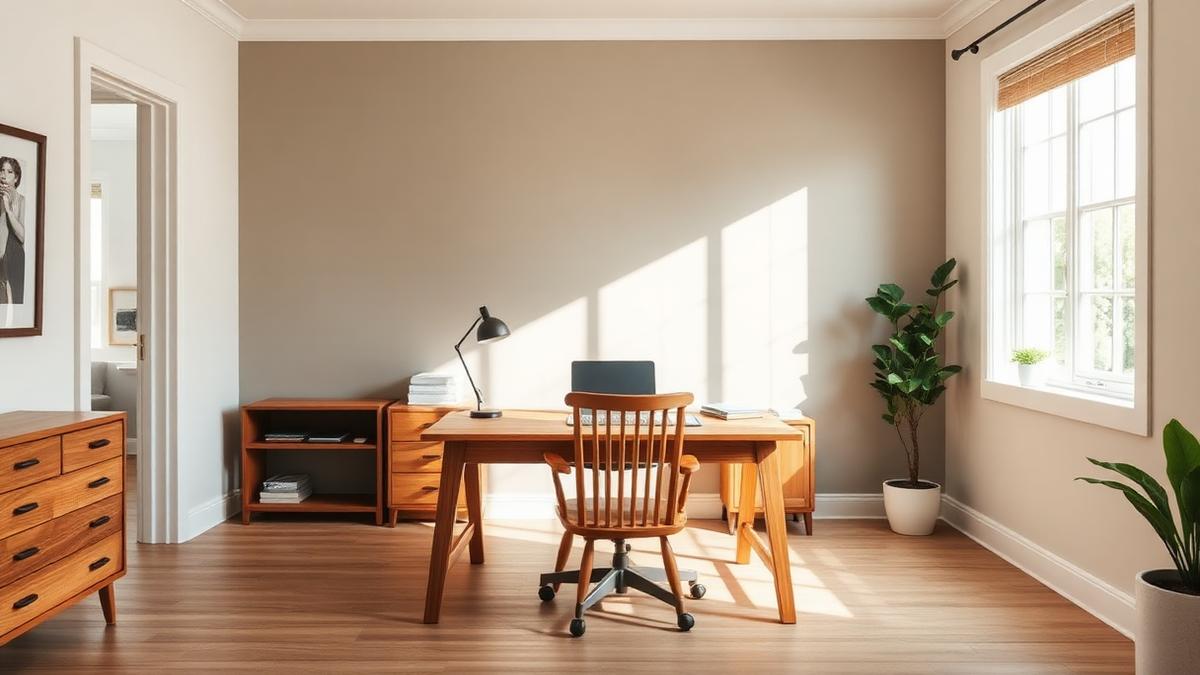
For a home office, use a room in the north, north-east or east where you have the choice, and face north or east while working with a solid wall behind you. Keep heavy storage against the south and west walls, keep the north and east open, and light the room properly if it was not designed as a work space.
Remote work turned a spare bedroom into an office in a very large number of American homes, and the room was almost never chosen for that purpose. It was chosen because it was empty. Several years on, people notice that the space they work in for eight hours a day was picked by process of elimination, and that is usually when the question reaches us.
The good news is that a home office is one of the more correctable spaces in a house. Nothing here is structural. It is room selection where you have a choice, and desk placement where you do not.
Which room to use
Where more than one room is available, the north, north-east and east are the preferred zones for study and desk work, with the north-west workable and often the practical answer in a US layout. The south-west is traditionally the zone of mass and authority rather than active work, which is why it suits a business owner's office better than a study.
The south-east is the fire quadrant and is not the first choice for a desk, though in practice many American plans put the only spare room there and we work with it. The one to be cautious about is a work space in the centre of the plan, since the centre is kept open in principle and a home office is a room that accumulates equipment, cables and stored paper.
Which way to face while working
Face north or east while working. This is the single most repeated piece of advice in this area and it is also the easiest to implement, because a desk can be turned in an afternoon.
North is generally recommended for work involving money, accounts and business, and east for study, learning and creative work. What you want to avoid is sitting with your back to the door, which classical practice and ordinary sense agree on, and facing a blank wall an arm's length away when a window position was available.
Behind you, a solid wall is preferred to a window or an open corridor. This is the arrangement most people naturally find comfortable anyway, and it is the reason so many US home offices get rearranged once anyone thinks about the room properly.
The basement office
A finished basement is where a great many American home offices end up, and it is the situation we are asked about most from the United States. It is not ideal, and pretending otherwise is not useful.
A basement is below ground level, receives little natural light and often has a low ceiling and no useful directional exposure. If a ground floor room is available at all, take it. Where the basement is genuinely the only option, which it often is in a house with children and a single spare room, then the things worth doing are lighting the space properly rather than relying on one overhead fixture, keeping the north-east portion of the basement clear and using the south-west portion for storage, orienting the desk to face north or east, avoiding the area directly under a bathroom above, and keeping the room ventilated and dry. A damp basement office is a problem worth fixing before any Vastu consideration.
The corner of an open plan
Where the office is a desk in a corner of a family room or a nook off the kitchen, which is common in newer US construction, you have less control over the zone and more over the arrangement.
- Put the desk in the north or east portion of the room if the room allows it.
- Face north or east, with a wall behind you rather than the room.
- Use a screen, bookcase or plant grouping to define the boundary, since an undefined work area in a shared space tends to spread.
- Keep the desk clear at the end of the day, which matters more in a shared room than in a dedicated one.
- Avoid placing the desk directly under a staircase or in a passage between two doorways.
Setting up the room itself
Once the room and the direction are decided, the rest is arrangement, and it is all reversible.
Heavy items, filing cabinets, bookshelves and equipment go against the south and west walls. The north and east are kept lighter and more open. Storage in the south-west of the room, work in the north-east of it. The same logic that applies to a house applies inside a single room, at smaller scale.
Lighting matters more than people expect, particularly in rooms that were never designed to be worked in. Natural light from the north or east is preferred, and where the room does not offer it, layered artificial lighting is better than a single ceiling fixture. Keep cables managed rather than pooled, keep the space under the desk clear rather than used as storage, and repair or replace equipment that has stopped working instead of leaving it in the room.
For a business run from home rather than employment carried out at home, the reading changes somewhat, and the considerations in Vastu for office and business success apply alongside these.
Getting the room assessed
A home office is small enough that people reasonably try it themselves first, and the guidance above will get most of it right. Where it is worth having looked at is when the room you have available sits in a zone you would not have chosen, when the house is open plan and there is no obvious place for the desk, or when you are about to spend money on built in furniture that will be difficult to move afterwards.
We assess US properties remotely by video call scheduled around your time zone, either as part of a full residential Vastu consultation or as a floor plan review where placement is the main question. How we work with clients across the country is set out on the Vastu consultant USA page, and the wider layout issues in American homes are covered in Vastu for American home layouts.
Frequently Asked Questions
Which direction should I face while working from home?
North or east. North is generally suggested for work involving money, accounts and business, and east for study, learning and creative work. Keep a solid wall behind you rather than a window or an open corridor, and avoid sitting with your back to the door.
Which room is best for a home office as per Vastu?
The north, north-east and east zones are preferred for desk work, with the north-west workable and often the practical answer in a US plan. The south-west suits a business owner's room rather than a study, and a work space in the centre of the plan is best avoided.
Is a basement home office bad as per Vastu?
A basement is not ideal, since it sits below ground, receives little natural light and offers no useful directional exposure. If a ground floor room is available, use it. Where the basement is the only option, light it properly, keep the north-east portion clear, store in the south-west, face north or east, and keep the space dry and ventilated.
Where should I put the desk in an open plan American house?
In the north or east portion of the room where possible, facing north or east with a wall behind you. Define the work area with a screen or bookcase, keep the desk clear at the end of the day, and avoid placing it under a staircase or in a passage between two doorways.
Where should storage go in a home office?
Filing cabinets, bookshelves and heavy equipment against the south and west walls, with the north and east kept lighter and more open. The same directional logic that applies to a house applies inside a single room at smaller scale.