Vastu Shastra
Vastu for Office: A Practical Layout Guide, Room by Room
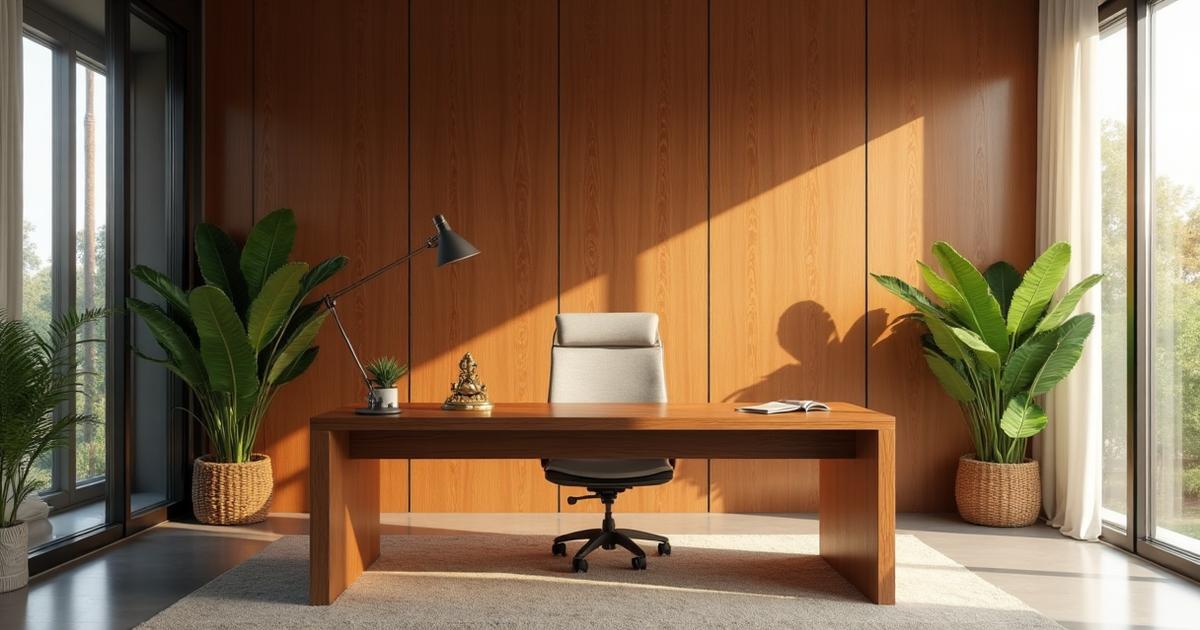
A practical Vastu layout guide for offices: where the owner's cabin, desks, reception, pantry, storage and staff seating traditionally go, and what to do when the building will not allow it.
By Mr. Avinash Maggirwar | Reviewed by Mr. Abhijit Maggirwar | Published | Updated | 7 min read
Quick Answer: Vastu for office layout places the owner's cabin in the southwest facing north or east, staff desks facing north or east, the entrance and reception in the north, east or northeast, the pantry in the southeast, heavy storage along the south and southwest walls, and keeps the centre of the office open.
Key Takeaways
- Owner's cabin in the southwest, seated facing north or east
- Staff desks face north or east, never with the back to the door
- Entrance and reception in the north, east or northeast
- Pantry in the southeast, storage along the south and southwest
- Keep the northeast light and the centre of the office open
This guide sets out the placement questions we are asked most often when reviewing office layouts, in the order we usually work through them on a floor plan.
Vastu for office layout comes down to a handful of placement decisions: where the owner sits and which way they face, where the entrance and reception sit, which way desks face, where the pantry and storage go, and how staff seating is arranged. This guide takes each in turn, gives the traditional direction and explains the reasoning, so you can check your own floor plan against it.
Before you start, stand at the centre of the office with a compass (a phone compass is fine if you keep it away from metal and electronics) and note where north falls on your plan. Every recommendation below depends on those directions, not on which way the building "feels" like it faces.
The owner's cabin direction
The southwest of the office is traditionally the zone of stability and authority, governed by the earth element. It is the preferred position for the owner's or managing director's cabin.
- Cabin position: southwest is first choice; south or west are the usual alternatives when southwest is not available.
- Seat position inside the cabin: towards the southwest corner of the room, with a solid wall behind the chair rather than a window or door.
- Facing direction: north or east while seated. North is associated with opportunity and east with growth and clarity.
- Desk: rectangular and solid, with enough space in front of it for visitors to sit facing the owner.
Avoid placing the owner's cabin in the northeast. That corner is kept light and open in Vastu, and a heavy, closed cabin there works against the principle. If the owner sits in an open plan, the same logic applies to the desk: towards the southwest of the floor, back to a wall, facing north or east.
Desk facing direction for staff
Desk facing is the single most adjustable item in any office, so it is worth getting right even when rooms cannot move. The traditional order of preference is:
- North facing, favoured for finance, accounts and sales roles.
- East facing, favoured for creative, planning and management roles.
- Northeast facing, acceptable for most roles.
Try to avoid seating people with their back to the main door or directly under a beam. Where a south or west facing seat cannot be avoided, give the person a solid wall behind them and keep their desk clear. These are small, low cost changes that most offices can make in an afternoon.
Reception and entrance
The entrance sets the first impression of the space, and in Vastu it is also how the office "receives" what comes in. North, east and northeast entrances are traditionally preferred.
- Entrance: well lit, clean and unobstructed. Keep shoe racks, bins and stacked boxes away from the door.
- Reception desk: in the northeast, north or east of the entrance area, with the receptionist facing north or east.
- Waiting area: northwest of the reception is a common choice, as the northwest is associated with movement, which suits visitors who come and go.
- Nameplate and signage: clearly visible and in good repair.
If your entrance is in the south or southwest, it is not a reason to move premises. Good lighting, a clear threshold and careful placement of the reception can go a long way, and a site assessment can suggest specific corrections.
Pantry and kitchen
The pantry holds the fire element (a microwave, kettle, induction plate or coffee machine), so it follows the same logic as a kitchen at home.
- First choice: southeast, the zone of Agni, the fire element.
- Second choice: northwest, if southeast is not available.
- Avoid: northeast and the centre of the office.
Place water (the dispenser or sink) in the north or northeast of the pantry and the heating appliances in its southeast, and keep the two apart where the room allows.
Storage, records and heavy equipment
Heavy items belong where the earth element is strongest, so storage is one of the easiest things to plan well.
- Heavy almirahs, files, record rooms and the server rack go against the south or southwest walls.
- A safe or cash box is traditionally kept in the southwest, opening towards the north.
- Keep the northeast light: no heavy cabinets, stacked cartons or storerooms in that corner.
- Do not store broken furniture or dead equipment anywhere in the office; clear it out.
Staff seating by role
Beyond desk facing, Vastu traditionally links departments to zones according to the nature of the work. A common arrangement is:
- Accounts and finance: north, the zone associated with wealth.
- Sales and marketing: northwest, associated with movement and communication.
- Senior managers: south or west, close to the owner's cabin.
- Design, research and planning: east or northeast, associated with clarity.
- Operations and administration: west.
Keep the centre of the office, the Brahmasthan, as open as possible. A meeting table is acceptable there; a pillar, toilet or storeroom is not.
Toilets, meeting rooms and the server room
- Toilets: northwest or west. Avoid the northeast, southwest and the centre.
- Meeting or conference room: northwest or west, with the senior person seated facing north or east.
- Server room and electrical panel: southeast, the fire zone.
Common office Vastu mistakes: a checklist
When we review office layouts, these seven problems come up most often:
- The owner's cabin in the northeast, or the owner sitting with their back to a door.
- Desks facing south or west when a simple turn would fix it.
- A cluttered, dark or blocked entrance.
- The pantry or a toilet in the northeast.
- Heavy storage in the north or northeast.
- A pillar, storeroom or toilet at the centre of the office.
- Broken equipment and old files left lying around.
Most of these can be corrected without construction: turning desks, moving storage, clearing the entrance and changing how rooms are used.
When the building will not allow it
Rented offices and shared floors rarely fit an ideal plan, and that is normal. Work in this order: first the changes that cost nothing (desk facing, clutter, the entrance), then furniture moves (storage and seating), and only then any structural work. Keep in mind that Vastu is traditional guidance; it sits alongside good lighting, ventilation, comfort and the practical needs of the business, not in place of them.
For a site assessment of your own office, see our commercial Vastu consultation. If you are fitting out a new office or signing a lease, a Vastu floor plan review lets you make these decisions on the drawing, before anything is built.
Related reading
- The complete Vastu Shastra guide
- Vastu tips for the home
- Our offices in Chhatrapati Sambhajinagar (Aurangabad) and Pune
Frequently Asked Questions
Which direction should the owner's cabin face as per Vastu?
The owner's cabin is traditionally placed in the southwest of the office, with the owner seated facing north or east and a solid wall behind the chair.
Which direction should I face while working in the office?
North or east is preferred. North is traditionally favoured for finance and sales roles, east for creative and management work. Avoid sitting with your back to the door.
Where should the reception be in an office as per Vastu?
In the northeast, north or east of the entrance area, with the receptionist facing north or east. The waiting area often sits in the northwest.
Where should the pantry be in an office?
Southeast first, northwest second. Avoid the northeast and the centre of the office. Keep water and heating appliances apart within the pantry.
Where should heavy storage and the safe go?
Against the south or southwest walls. The safe is traditionally kept in the southwest, opening towards the north. Keep the northeast light and clear.
Can Vastu be applied to a rented office?
Yes. Start with desk facing, clutter and the entrance, then move storage and seating. Most corrections in a rented office need no construction.
What should be at the centre of an office?
The centre, or Brahmasthan, should be kept as open as possible. A meeting table is acceptable; a pillar, toilet or storeroom is traditionally avoided.
About the Author
Mr. Avinash Maggirwar
Vastu & Astrology Consultant, Divyam Vaastu
Avinash Maggirwar leads Vastu and astrology consultations at Divyam Vaastu, the practice founded in 1992.
Reviewed by Mr. Abhijit Maggirwar, Senior Vastu-Astrology Consultant. Abhijit Maggirwar leads Vastu and astrology consultations at Divyam Vaastu alongside Avinash Maggirwar.