Vastu for Bathrooms: Reading Rooms, Not Just Fixtures
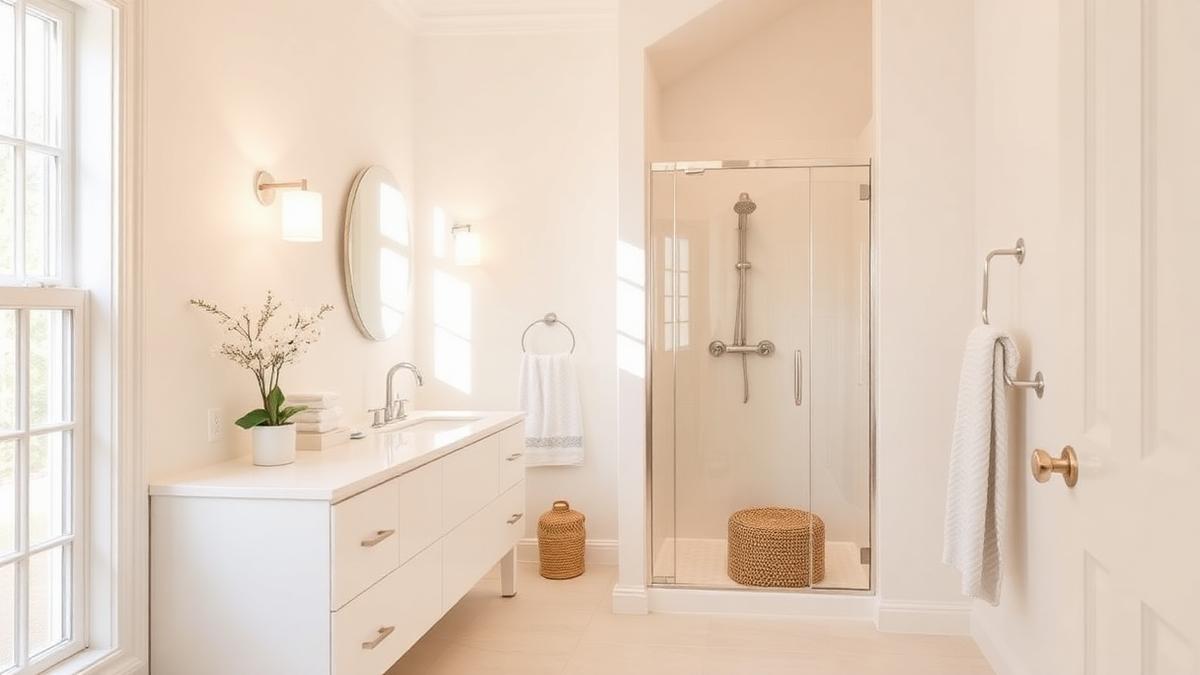
Vastu reads a bathroom as a wet, draining space best placed in the west or north-west, with the north-east, south-west and centre treated carefully. Modern homes have several bathrooms rather than one, so the useful reading ranks them by how heavily each is used and by what they adjoin.
Almost every question we get about bathrooms is really a question about a fixture, usually the WC. That is a narrower topic and we have written it out separately in toilet Vastu placement and corrections, which covers where a WC sits and what can be corrected without construction. This piece is about the room around it, which is a different problem, and a bigger one in modern housing.
The short answer
Vastu reads a bathroom as a wet, draining, discharging space. The west and the north-west suit it well. The south, when handled sensibly, is workable. The zones treated most carefully are the north-east, the south-west and the centre of the plan. Beyond direction, the room is read on how it is ventilated, whether it drains cleanly, and what it shares a wall or a door line with.
Why the classical guidance needs translation
The texts were written for houses with a single wet area, frequently detached from the main structure. A contemporary four bedroom home in the United States may have three full bathrooms, a powder room off the hallway and a laundry with a floor drain. There is no arrangement of five wet spaces that avoids every carefully read zone, and any consultant who says otherwise is selling certainty rather than assessment.
So the reading changes shape. Instead of asking whether a bathroom is in a good direction, we ask which of them carries the most use, what each one adjoins, and whether the plan has concentrated its wet load into a zone that wanted lightness. A rarely used guest bath in a less favoured position is a footnote. The master en suite in the same position is a finding.
En suites and the bathroom off every bedroom
The American pattern of a bathroom attached to each bedroom is the single most common thing we translate for clients there. Classical Vastu has no objection to an attached bathroom in principle. What it reads is the relationship between the sleeping zone and the wet zone.
What we look at in an en suite
- Which wall of the bedroom the wet room takes, and whether it eats into the bedroom's own north-east.
- Whether the bathroom door opens directly onto the head of the bed.
- Whether the WC or the shower shares a wall with a pooja (a prayer ritual) space or a kitchen on either side of the partition.
- How the room ventilates, since an en suite with only a recirculating fan behaves differently from one with a window.
- Whether the sleeping position can be adjusted, which is usually the correction available. Our piece on sleeping direction as per Vastu covers that in detail.
A master suite where the bathroom occupies the south-west corner deserves particular attention, because that is the zone the plan most wants heavy and settled. Where the layout cannot change, the usual work is on the bed position, on storage mass elsewhere in the room, and on keeping the wet area dry and closed when not in use.
Shared bathrooms, hall baths and powder rooms
A hall bath serving children's bedrooms is read on the same terms but with the traffic pattern included, because a bathroom opening straight into a main circulation route is more intrusive in the plan than one tucked behind a vestibule.
Powder rooms are the ones clients worry about needlessly. A half bath under a staircase or beside an entry hall is a small, dry, lightly used space. It matters when it sits in the north-east or immediately beside the main entrance, and it usually does not matter much otherwise. Where it sits under the stairs, our piece on staircase Vastu is the companion reading.
A bathroom in the north east
This is the question that brings most people to the topic, so it deserves a plain answer. The north-east is the zone Vastu keeps lightest, and a full bathroom there is read as a genuine fault rather than a minor one. It is also extremely common, because architects put windows and small wet rooms on the same convenient corner.
What we do about it depends on what exists. Sometimes the room can be demoted to storage or a dry utility use and the household absorbs the change easily. Sometimes only the fixture can move within the room. Often nothing structural is available, and the work becomes about drainage, ventilation, keeping the space clean and dry, and rebalancing the rest of the plan so the fault is not compounded. We would rather tell a client that than sell them a symbol to hang on the door.
What is worth acting on
- A heavily used bathroom in the north-east, which is the finding we prioritise.
- A wet room sharing a partition with a pooja space or a cooking zone.
- A bathroom door directly in line with the main entrance or the head of a bed.
- Standing damp, a slow drain or a fixture leaking into an adjoining wall, which is treated as a fault regardless of direction.
- Wet load concentrated in one zone across several floors of a two-storey house.
Getting your own plan read
We assess properties in the United States online by video call from our offices in India, working from the floor plan and the compass bearings you send us. Vastu consultation, Vedic astrology and kundali, muhurat (an auspicious time window), tarot card reading, Akashic Records reading and numerology are all available online by video call. Reiki and sound healing are available online by video call as well, and in person at our Chhatrapati Sambhajinagar (Aurangabad) and Pune offices. Dowsing requires attending the property and cannot be conducted remotely either.
If you want the bathrooms in your house read against everything else in the plan, see our residential Vastu consultation, our Vastu consultant services for clients in the USA, or what a Vastu consultant does. You can also run a first pass yourself using how to check the Vastu of your house.
Frequently Asked Questions
Which direction is best for a bathroom as per Vastu?
The west and the north-west suit a bathroom well, and the south is workable when the room ventilates and drains properly. The north-east, the south-west and the centre of the plan are the zones read most carefully. Ventilation, drainage and what the room adjoins matter alongside direction.
Is an attached bathroom against Vastu?
No. An attached bathroom is not a fault in itself. What is read is which wall of the bedroom it takes, whether it eats into the bedroom's north-east, whether the door opens onto the head of the bed, and how it ventilates. In most homes the correction available is the bed position rather than the room.
What if every bedroom has a bathroom, as in most American homes?
That is the normal case we work with and there is no arrangement of four or five wet spaces that avoids every carefully read zone. We rank them by use. The master en suite carries the reading, a rarely used guest bath is a footnote, and the question becomes whether wet load has concentrated in a zone that wanted lightness.
How bad is a bathroom in the north east?
It is a genuine fault rather than a minor one, because the north-east is the zone kept lightest. It is also common, since architects favour that corner for small wet rooms. Sometimes the room can be demoted to dry storage or the fixture moved within it. Where nothing structural is available, the work is on drainage, ventilation and rebalancing the rest of the plan.