Which Direction Should You Sleep? Vastu on Bed Placement
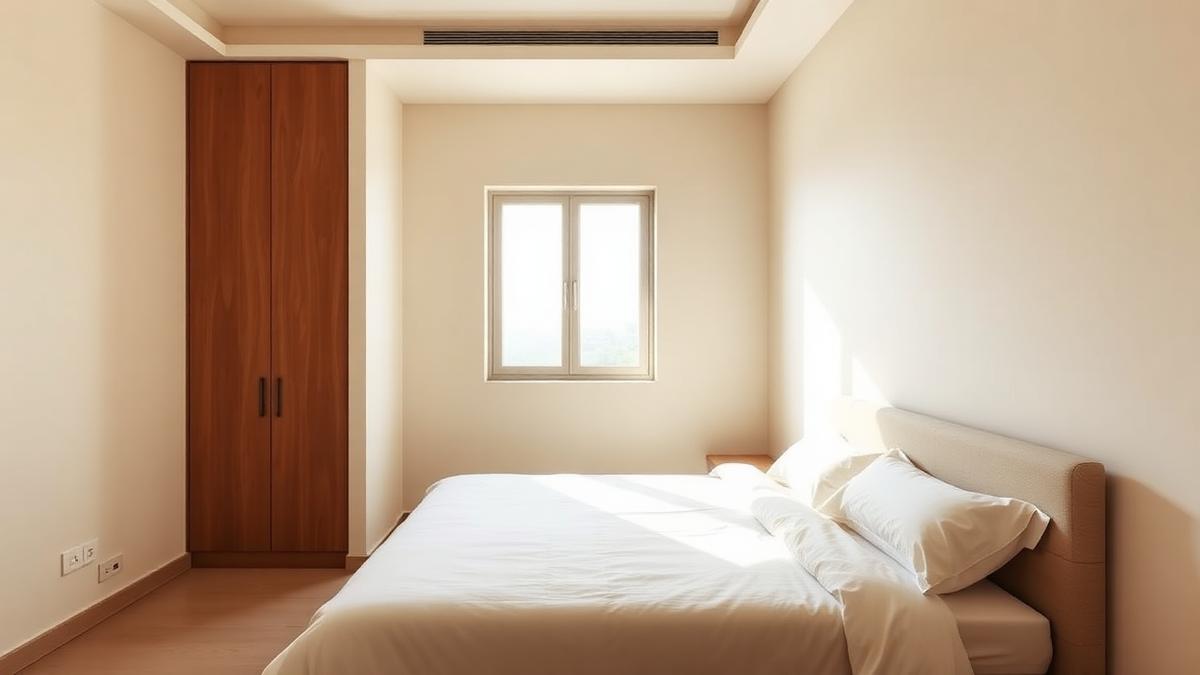
Vastu places the head to the south or east while sleeping, and avoids the head to the north. In a bedroom where the layout limits options, the workable positions are assessed against the room's shape, the door and window positions, and who uses the room.
Of everything we suggest in a home, this is the change clients act on fastest. It requires nothing but moving a bed, and it is available in almost every room we walk into.
The positions and the reasoning
Head to the south is the position classical texts favour most. The reasoning offered is magnetic: the earth's field runs north to south, and the head is treated as the pole that should align with the earth's south rather than oppose it. Traditional practice held that sleeping with the head south settles the body and produces deeper rest.
Head to the east is the other strongly favoured position, and the reasoning is different in kind. The east is associated with the rising sun, with learning and with mental activity. It is the position traditionally suggested for students and for anyone doing sustained intellectual work.
The head to the north is the one to avoid, and the explanation given is the mirror image of the south argument. Two like poles opposing each other is the traditional image, with the result described as disturbed and unrestful sleep. Whatever one makes of the physics, the classical position is unambiguous and consistent across sources.
West is treated as neutral rather than favoured. It is workable where the room gives you nothing better, and we place beds that way regularly without hesitation.
Why this is the change we suggest most often
In a finished flat, almost everything expensive is fixed. The walls are staying, the kitchen platform is cast, the toilet is where the builder put it. What remains is placement, and placement is free.
Bed direction sits at the top of that list. It costs nothing, needs no material, no construction and no permission from a society committee. It can be done on a Sunday afternoon and reversed just as easily if the room does not accommodate it well. When we hand over findings on a flat, this is usually the first item, because it is the one with the highest ratio of effect to effort.
Clients sometimes expect a longer or more elaborate list. We would rather give them three changes they will actually make than fifteen they will not.
When the room does not allow it
Plenty of bedrooms do not. A built-in wardrobe runs the length of the only wall that would work. The door opens directly onto the position the bed would have to occupy. The window sits exactly where the headboard needs a solid surface. In compact flats this is closer to normal than exceptional.
We work out the best available position rather than insisting on one the room cannot give. That usually means taking the second preference, or accepting a workable compromise on direction in order to keep the headboard against a solid wall and the bed clear of the door swing. A compromise that gets implemented is worth more than an ideal that does not fit.
What we will not do is tell someone to rebuild a wardrobe over a bed direction. The proportion has to hold.
Different occupants, different answers
A direction that suits one person in a house may not be the right one for another. This is where the space and the chart are read together rather than separately, and where a general rule stops being sufficient.
In practice this comes up most with children's rooms, with an elderly parent in the house, and where two people in one bedroom would be assessed differently on their own. We work through it case by case, and where a chart is available it informs the decision. Our Vedic astrology and kundali service covers that side of the reading.
What else affects bed placement
Direction is one of several things we look at in a bedroom.
- The bed's position relative to the door, since lying directly in line with the doorway is avoided.
- Whether a beam runs over the bed, particularly over the head end.
- Whether the headboard has a solid wall behind it rather than a window or an open gap.
- Mirrors and wardrobe mirror panels that face the bed directly.
- What sits on the other side of the wall behind the head, including a toilet or a kitchen platform.
- Storage under the bed, which is workable but not for anything damp or broken.
Most of these are settled in the same afternoon as the bed direction, since they involve the same furniture. Where a beam is the issue, the answer is usually to move the bed rather than the ceiling.
Master bedroom Vastu, and where the room itself belongs
Bed direction is read inside a room, and the room is read inside the plan. The south-west is the position classical practice gives the master bedroom, because that quadrant is the heavy anchoring corner of the layout and the largest bedroom with the heaviest furniture belongs in it. On an upper floor the same logic applies, so the master bedroom sits in the south-west of that floor.
The other bedrooms follow after it. The west and the south are workable for adults, the north-west is traditionally suggested for a guest room or for children who have grown up, and the north-east is the room we ask not to be used as a master bedroom since that zone is meant to stay light. A bedroom in the south-east, the fire quadrant, is the placement we flag most often after the north-east, and it is common in flats where the builder has put the kitchen elsewhere.
Bed position within the master bedroom
- The bed towards the south-west portion of the room rather than floating in the centre.
- The headboard against a solid wall, with the head to the south or the east.
- A gap left between the bed and the wall on the north and east sides where the room allows it.
- Wardrobes and heavy storage along the south or the west wall of the room.
- The dressing mirror positioned so it does not face the bed, or kept covered at night if it must.
- An attached toilet placed away from the head end of the bed, and its door kept closed.
- Electronics, particularly a television, kept out of the direct line of the bed where possible.
Couples ask whether the room itself can be changed once the family has settled in, and often it can. Swapping the master bedroom with another room of similar size is a furniture exercise rather than a construction one, and it is one of the more substantial corrections available in a finished home. Whether it is worth doing depends on what else moves with it, which is a judgement made on the plan.
What a consultation adds
You can apply the head south or head east rule yourself tonight, and if your room allows it, you should. What an article cannot do is tell you which compromise to take when the room refuses both, how the occupants of your house differ from each other, or how the bedroom reads against the rest of the layout. That is the work we do on site and on plans. If you want your rooms assessed, see our residential Vastu consultation, read about our Vastu consultant services, read our honest answer on south-facing houses, or contact us to arrange a reading.
Frequently Asked Questions
Which direction should we sleep with our head?
Vastu favours the head to the south, with the head to the east as the other recommended position, particularly for students and anyone doing sustained mental work. West is treated as neutral and workable. The head to the north is the position classical texts consistently avoid.
Why should you not sleep with your head to the north?
The traditional reasoning is magnetic. The earth's field runs north to south, and the head is treated as a pole that should align with the earth's south rather than oppose it. Sleeping with the head north is described in classical sources as producing disturbed and unrestful sleep.
Does sleeping direction really matter?
It is the change clients act on most readily, because it costs nothing and can be reversed. Classical Vastu treats it as significant, and in a finished flat where the layout is fixed it is among the few meaningful adjustments still available. We suggest trying it before forming a view.
What if my room does not allow the right direction?
We work out the best available position instead of insisting on an impossible one. That often means taking the second preference, or keeping the headboard against a solid wall and the bed clear of the door swing even if the direction is not ideal. A workable compromise is better than an unworkable ideal.
Which direction should the master bedroom be as per Vastu?
The south-west, since that quadrant is the heavy anchoring corner of the layout and the largest bedroom with the heaviest furniture belongs in it. On an upper floor the same logic applies within that floor. The north-east and the south-east are the two positions we flag most often for a master bedroom.
Where should the bed be placed within the master bedroom?
Towards the south-west portion of the room rather than floating in the centre, with the headboard against a solid wall and the head to the south or the east. Wardrobes and heavy storage read best along the south or west wall, and the dressing mirror is kept out of the direct line of the bed.