Vastu for Study Room and Desk Direction
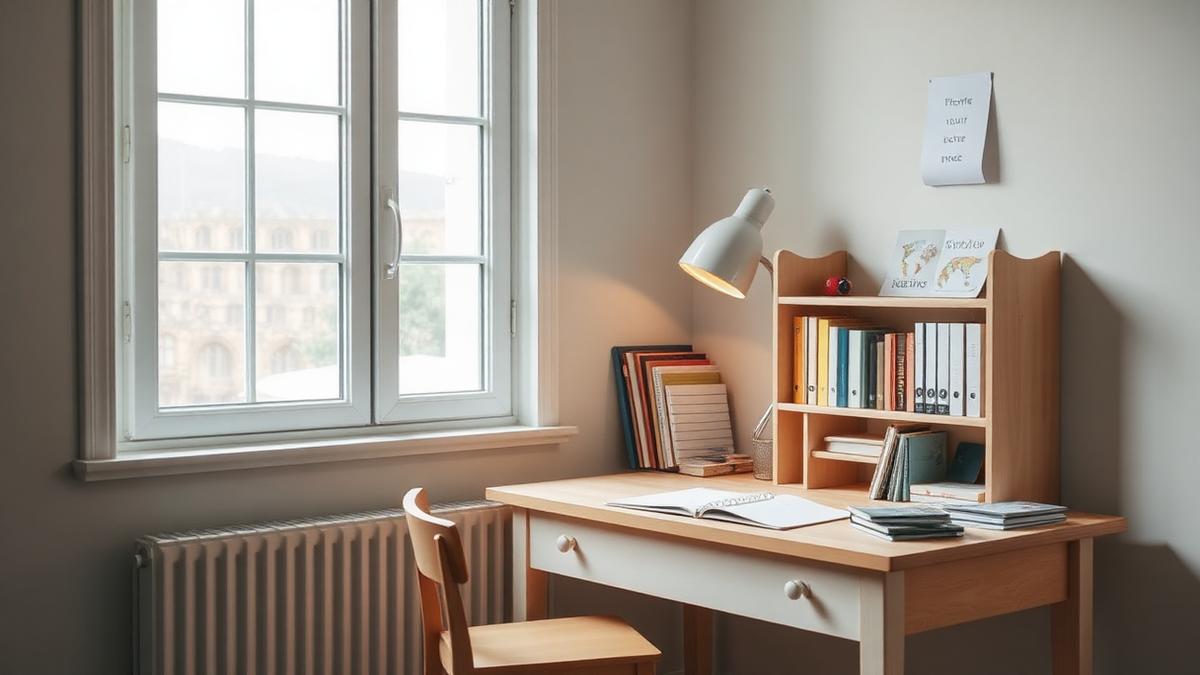
Vastu places a study space in the north, east or north-east of the house, with the child facing north or east while working. In homes without a study room the same reading applies to the seat at a shared table. A solid wall behind the chair and light that does not cast a shadow matter alongside direction.
Parents ask about study rooms and then describe a house that does not have one. The homework happens at the kitchen island, on the dining table, in a corner of the family room and sometimes on a bedroom floor. Guidance that only works for a dedicated room is not much use, so this covers both.
This is deliberately separate from our piece on setting up a home office, which is about adults working from home, video calls and the basement office problem. Children studying is a different question with different answers.
The short answer
A study space reads best in the north, the east or the north-east of the house, and the child faces north or east while working. The north-east is favoured for concentration in classical practice, the east for the morning light, and the north as a comfortable default when neither is available. What the child faces matters more than where the desk sits, and both matter less than whether the space is quiet enough to use.
Where to put the study space
Given a choice of rooms, the north-east and the east side of the plan are the ones we point parents towards. In a two-storey home the same reading applies floor by floor, so a bedroom on the north-east side of the upper floor is read the same way as a ground floor room in that zone.
The positions we steer away from are the south-west, which the plan wants heavy and settled rather than active, and a space directly under a staircase or under a bathroom on the floor above. A windowless interior room is workable but rarely holds a child for long, which is a practical objection more than a classical one.
Which direction to face while studying
Facing north or east is the classical preference and it is worth arranging, because it costs nothing more than turning a desk. Facing east is associated with clarity and takes the morning light. Facing north is the everyday default and suits a longer session.
Setting up the desk
- Put a solid wall behind the chair rather than a door or an open stair.
- Avoid facing directly into a wall corner or sitting with an overhead beam or a shelf directly above the head.
- Keep the desk out of the line of the door where possible, so a child is not looking at every passing person.
- Let the light fall from the left or the front rather than casting the child's own shadow across the work.
- Keep the surface clear enough to use. A desk holding everything except books is the most common problem we see in children's rooms and it has nothing to do with direction.
Shared family spaces
When homework happens at the kitchen island or the dining table, the useful version of the guidance is about the seat rather than the room. Pick the chair that faces north or east and make that the child's usual place. In an open plan house this is often available at no cost at all, because the table has four sides and nobody has thought about which one anyone takes.
Two things matter more than bearing in a shared space. The first is the sight line to the television, which decides whether the seat gets used. The second is the traffic pattern, since the seat with the back to the main walkway is the one children abandon. Our piece on Vastu for American home layouts covers reading open plans more generally.
Bedrooms that double as study rooms
This is the normal case. A child's bedroom holding a desk is read on both counts, and where the two readings pull in different directions the sleeping position takes priority. Sleep occupies more hours and is less flexible. Get the bed right first, using our piece on sleeping direction, then place the desk in the best remaining option.
Where the room is small enough that the desk must sit at the foot of the bed or in the north-east corner occupied by a wardrobe, we say plainly which compromise we would take rather than pretending the room can hold both ideals.
What we do not claim
A desk direction does not produce grades. What placement can do is remove some of the friction around studying, which is a modest and real thing. Parents who arrive expecting a remedy for a difficult year get a candid conversation instead, and often the useful finding is somewhere else in the house entirely.
Having the room assessed
We assess properties in the United States online by video call from our offices in India, working from the floor plan and the compass bearings you send us. Vastu consultation, Vedic astrology and kundali, muhurat (an auspicious time window), tarot card reading, Akashic Records reading and numerology are all available online by video call. Reiki and sound healing are available online by video call as well, and in person at our Chhatrapati Sambhajinagar (Aurangabad) and Pune offices. Dowsing requires attending the property and cannot be conducted remotely either.
If you want a child's room read alongside the rest of the plan, see our residential Vastu consultation or our Vastu consultant services for the USA. For a general first pass on the house, use how to check the Vastu of your house, and for the wider service picture see what a Vastu consultant does.
Frequently Asked Questions
Which direction should a study table face as per Vastu?
North or east. Facing east is associated with clarity and takes the morning light, and north is the comfortable default for a longer session. What the child faces matters more than where the desk sits, and both matter less than whether the space is quiet enough to be used.
Where should a study room be placed in the house?
The north, the east and the north-east read best, and the same applies floor by floor in a two-storey home. The south-west is the zone we steer away from, since the plan wants it heavy and settled. A space directly under a staircase or under an upstairs bathroom is also read carefully.
What if my child studies at the kitchen island or dining table?
Then the guidance applies to the seat rather than the room. Choose the chair facing north or east and make it the child's usual place. In an open plan house that costs nothing. The sight line to the television and the traffic pattern behind the chair decide whether the seat actually gets used.
The bedroom is also the study room. Which comes first?
The bed. Sleep occupies more hours and is harder to rearrange, so the sleeping position takes priority and the desk goes in the best remaining option. In a small room we will say which compromise we would take rather than claim both ideals fit.