Mangal Dosh and Kundali Matching, Explained Calmly
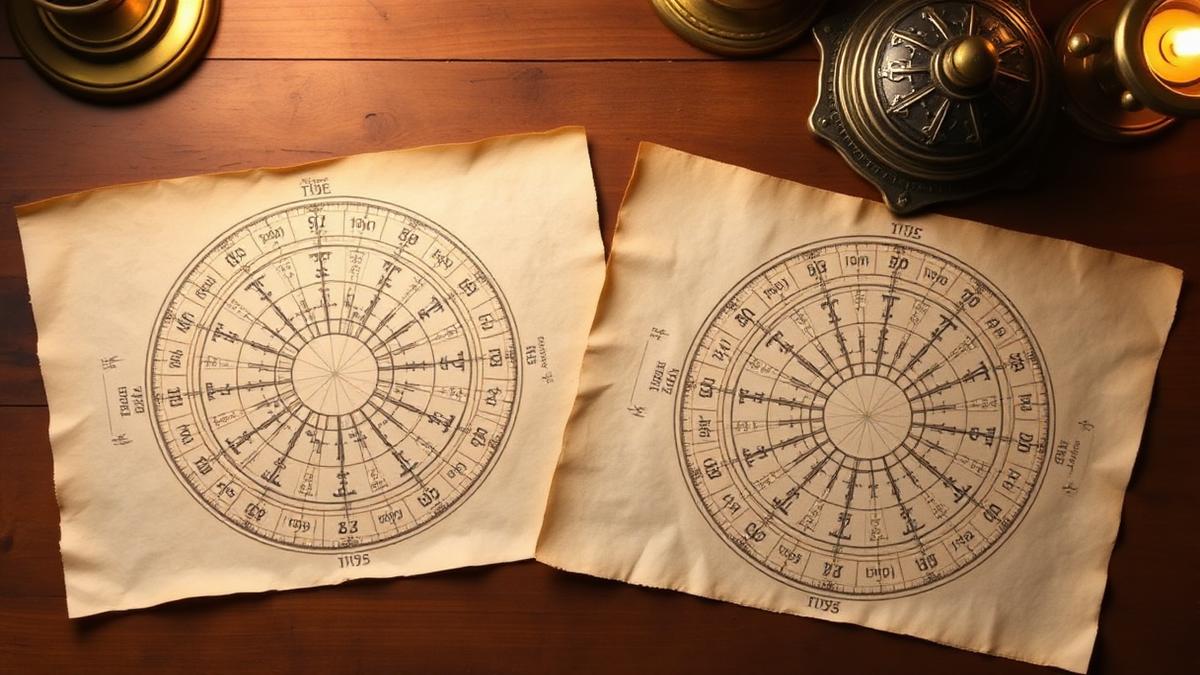
Mangal Dosh describes Mars occupying certain houses in a birth chart, commonly the first, second, fourth, seventh, eighth and twelfth from the lagna. Kundali matching scores a pair out of 36 gunas across eight factors, but that score is one layer only. A full reading also examines the seventh house, Venus, Jupiter, the strength of Mars and the running dasha periods.
Few phrases cause as much distress in Indian families as the word manglik. A chart is checked, a dosh is announced, and a proposal that everyone was comfortable with the previous week is suddenly in question. Most of the panic comes from the way the term is used rather than from the astrology behind it.
Here is what Mangal Dosh means, what kundali matching involves, and where the popular version parts company with the classical one.
What Mangal Dosh is
Mangal Dosh, also called Manglik Dosh or Kuja Dosha, is the condition described when Mars occupies certain houses in a birth chart. The houses cited in the texts are the first, second, fourth, seventh, eighth and twelfth, counted from the lagna. Different traditions differ on the second and the fourth, and some count the condition from the Moon or from Venus as well as from the lagna, which is one reason two astrologers can give a family two different answers about the same chart.
Mars in classical terms carries assertion, drive, heat and conflict. The houses in question relate to the self, family and speech, domestic comfort, partnership, longevity and expenditure. The concern with Mars in these positions is about temperament and friction in domestic life, not about fate.
Guna milan and the 36 points
Kundali matching in North Indian practice is usually built on Ashtakoota, the eight-fold matching, which scores a pair out of 36 gunas.
- Varna, one point, on temperament and outlook.
- Vashya, two points, on mutual influence.
- Tara, three points, on health and wellbeing in the pairing.
- Yoni, four points, on compatibility of nature.
- Graha Maitri, five points, on the friendship of the chart lords.
- Gana, six points, on disposition.
- Bhakoot, seven points, on prosperity and family life.
- Nadi, eight points, the heaviest single factor.
The score is calculated from the Moon signs and nakshatras of the two charts. It is quick, it is easy to automate, and that is precisely why it has become the whole conversation. Every free matching site on the internet produces this number in a second, and families then treat it as a verdict.
It is not a verdict. It is one layer, and it deliberately looks at a narrow set of factors. A pair can score well on gunas and still show difficulties elsewhere in the charts, and a modest score can sit alongside charts that agree on the things that matter to that particular couple.
What a full matching looks at
Beyond the gun score, a proper reading considers the strength and placement of Mars in both charts rather than the presence of the dosh alone, the seventh house and its lord in each chart, the condition of Venus and Jupiter as significators of marriage, the running dasha periods for both people, and any doshas present in either chart together with what modifies them.
The last point is where the popular version misleads most. Classical texts describe conditions under which the effect of Mangal Dosh is considered reduced or cancelled. Mars in its own sign or exalted, certain aspects from Jupiter, the presence of a comparable condition in the other chart, and specific placements are all discussed as mitigating factors. Whether these apply is a matter of reading the chart, which is exactly what a one-line software output cannot do.
Manglik to manglik
The most repeated remedy in circulation is to match a manglik with another manglik. This does appear in the tradition as one of the mitigating conditions, and it is not nonsense. It is also not a universal fix applied by ticking a box, because it depends on the placement and strength of Mars in both charts rather than on the label alone. Two charts with the label and very different Mars conditions are not the same case.
How we approach a matching
We look at both charts fully and give the family an honest reading of where the charts support each other and where they show friction, without a verdict dressed up as arithmetic. If a dosh is present we say so, we say how strongly it presents, and we say what the texts describe as modifying it in that specific chart. We do not tell people what decision to make about a marriage, because that is not an astrologer's call.
What we can offer is a clear reading, including a straightforward answer when the charts genuinely do not agree well. Traditional remedial measures exist and are discussed where relevant, and we describe them as traditional practice rather than as a guarantee of any outcome.
What to bring: accurate birth date, time and place for both people. Birth time matters more here than anywhere else in astrology, because the lagna changes roughly every two hours and the houses that Mangal Dosh depends on are counted from it. An uncertain birth time means an uncertain reading, and we would rather say that than proceed on a guess.
Getting a matching done
You can read more about how we work in Vedic astrology consultations or on our astrologer in Pune page, and there is a companion guide on how to choose the right astrologer if you are deciding who to consult. Consultations run from the Chhatrapati Sambhajinagar (Aurangabad) head office, the Pune branch office and remotely. Contact us with both birth details to arrange one.
Frequently Asked Questions
What is Mangal Dosh?
Mangal Dosh, also called Manglik Dosh or Kuja Dosha, is the condition described when Mars occupies certain houses in a birth chart, commonly cited as the first, second, fourth, seventh, eighth and twelfth from the lagna. Traditions differ on which houses count and on whether the condition is also reckoned from the Moon or Venus.
How many gunas are needed for a good kundali match?
Guna milan scores a pair out of 36 across eight factors. Families commonly treat higher scores as better, but the score reflects a deliberately narrow set of factors calculated from the Moon signs and nakshatras. A full matching also reads the seventh house and its lord, Venus and Jupiter, the position of Mars in both charts and the running dasha periods.
Can Mangal Dosh be cancelled?
Classical texts describe conditions under which the effect is considered reduced or cancelled, including Mars placed in its own sign or exalted, certain aspects from Jupiter, and a comparable condition present in the other chart. Whether any of these apply depends on reading the actual chart rather than on the label alone.
Should a manglik only marry another manglik?
Matching one manglik with another appears in the tradition as one of the mitigating conditions, but it is not a checkbox. It depends on the placement and strength of Mars in both charts, and two charts carrying the same label can present very differently.
What details are needed for kundali matching?
Accurate birth date, time and place for both people. Birth time is especially important because the lagna changes roughly every two hours and the houses used to assess Mangal Dosh are counted from it. If a birth time is uncertain, we say so rather than proceed on an assumption.