North Facing House Vastu: Good Orientation, Not a Guarantee
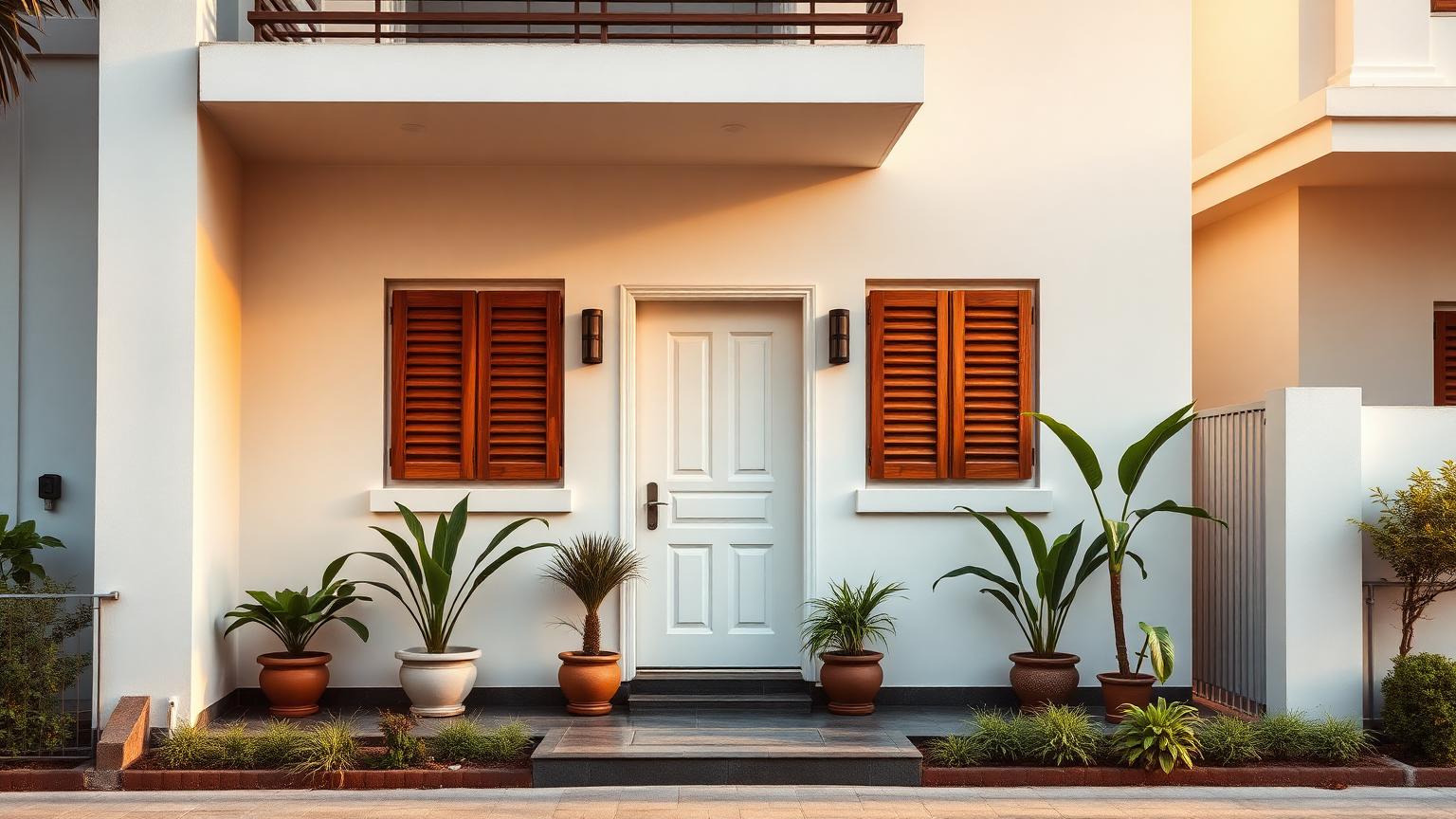
A north facing house is favourable in classical Vastu for light and association, but it is not a guarantee of a sound property. The segment of the northern wall the main door sits in, and how the north-east and south-west are loaded inside the plan, matter more than the orientation itself.
North-facing is the orientation buyers ask for by name, and the one agents quote a premium on. That reputation is doing more work than the texts ever asked of it. A northern entrance is a good starting point and nothing more than a starting point.
The short answer
A north-facing house is not automatically a good house, and no orientation is a defect. The direction of the wall your door sits in is a smaller factor than where the kitchen, the master bedroom and the water sources fall inside the plan. We have advised clients against north-facing flats and towards south-facing ones in the same building, and the reasoning was the internal layout every time.
The reason the fear and the enthusiasm around orientation are both disproportionate is set out at length in our piece on whether a south-facing house is actually a problem, along with how a wall is divided into segments and why the door position within the wall carries the reading rather than the wall itself. Rather than repeat that argument here, this piece stays on the north.
What the classical texts say about the north
The north is the direction of Kubera in classical association, and it is linked with flow, replenishment and accumulation. Alongside that sits the practical reason, which is older than any of the symbolism: in the northern hemisphere the north face receives steady indirect light through the day and almost no harsh direct sun. A northern wall is the one you can open up generously without paying for it in heat.
That is the whole of the classical advantage, and it is a real one. It is not a promise about the property. The texts spend far more attention on the interior zones than on which side the front door happens to be cut into, and the popular reading has inverted that emphasis entirely.
Where the entrance should sit in a northern wall
Divide the northern wall into equal segments and read the one the door falls in. The favoured positions run through the middle of the wall and towards its eastern end, which brings the entrance closer to the north-east. The segment to be careful about is the far western end of the northern wall, close to the north-west corner, and the position we ask clients to avoid outright is the corner itself where the northern and western walls meet.
This matters because two flats on the same northern facade can read quite differently. In row houses and duplexes the builder frequently pushes the entrance to whichever end of the elevation suits the internal circulation, and that decision was taken for plumbing reasons rather than for yours. Measure the door position on the plan with a compass before you take the orientation as settled.
Practical points on a northern entrance
- Keep the approach to the door clear, since a north-facing entrance is usually the best-lit one and clutter in front of it is the most visible finding.
- Do not let a side or service entrance on another wall become wider than the main door.
- Where the door sits close to the north-east, the space immediately inside it is worth keeping open rather than filling with storage.
How a north-facing plan is read
Once the door is placed, the reading moves inside, and a north-facing plan has one characteristic problem. Because the north and north-east side is the one with the good light and the street view, builders and owners both push the pleasant rooms into it. That is how a heavy master bedroom, a store or an attached toilet ends up in the north-east, which is the zone classical practice asks to be kept light, open and unloaded.
The second thing we look for is what happened to the south-west as a result. In a plan where all the attention went to the north, the south-west often ends up carrying a small bedroom, a balcony or nothing at all. That corner is meant to hold the weight of the layout, and an underbuilt or sunken south-west is a more significant finding than any entrance position.
After that the sequence is ordinary: the kitchen and whether the south-east is usable for it, the position of the master bedroom, where the overhead tank and the underground sump sit relative to each other, and how the plot drains. Inside the bedroom, the head of the bed is read separately, as set out in our piece on sleeping direction as per Vastu.
What tends to need adjustment
- A north-east bedroom or store, where the usual answer is to change what the room is used for rather than to move a wall.
- Heavy built-in storage stacked along the northern and north-eastern walls.
- An underweighted south-west, where furniture mass and how the corner is used are the available levers.
- An overhead tank placed on the north-east side of the terrace, which is one of the more common findings in independent houses.
- A kitchen pushed into the north to catch the light, which is worth assessing against what the south-east is being used for instead. See kitchen direction as per Vastu for how the stove and sink are read inside it.
Almost all of that is placement and usage. Construction is rarely the answer, and when someone proposes demolition for an entrance position, ask them what else in the plan they read before arriving at it.
Is a north-facing house good?
It is a comfortable orientation with a good light profile and a favourable classical association, and it is the one most likely to be sold to you with a premium attached. Whether the house is good depends on the plan. A north-facing flat with a loaded north-east and an empty south-west is a weaker property than a west-facing one that got its zones right, and we see that comparison often enough that it has stopped surprising us. Pay for the property, not for the compass bearing.
In a US house
In a US subdivision the house usually faces the street, so the facing direction is set by the road layout rather than chosen. A north-facing American house often has its attached garage on the front elevation, which places a heavy, closed mass in the north. That is worth noting, not fearing: the reading then looks at where the front door itself sits along the northern wall and how the northeast corner is used. On a cul-de-sac, the lot is often pie shaped and wider at the back, which changes how the corners of the plot fall. Take compass readings from true north, because magnetic north can differ from it by more than ten degrees in parts of the country. Our guide to Vastu for American home layouts covers basements, garages and split levels in more detail.
The other three orientations
A house has one entrance wall and there are four of them, so the set is written as four pieces rather than one long one.
- East facing house Vastu, on the orientation buyers pay a premium for and whether it earns it.
- West facing house Vastu, on heat, the western entrance and reading a west-facing layout.
- South facing house Vastu, our fullest treatment of why orientation fear is misplaced and how door segments are read.
What a consultation adds
This article can tell you what the northern wall segments are and what a north-facing plan usually gets wrong. It cannot tell you which segment your own door falls in, how loaded your north-east actually is, or whether the flat in front of you is the better of the two you are choosing between. If you want that done on your property, read about our residential Vastu consultation or our wider Vastu consultant services, see how to run a first pass yourself in how to check the Vastu of your house, look at what an assessment involves on our Vastu consultation fees page, or contact us with the floor plan.
Frequently Asked Questions
Is a north facing house good as per Vastu?
It is a favourable orientation in classical Vastu, associated with flow and replenishment, and it has a genuinely good light profile because the northern face takes steady indirect light. That said, it is a starting point rather than a verdict. A north-facing house with a loaded north-east and an empty south-west reads worse than a south or west facing house with clean interior zoning.
Where should the main door be in a north facing house?
The northern wall is divided into equal segments and the door is read by the segment it falls in. The favoured positions run through the middle of the wall and towards its eastern end, closer to the north-east. The far western end of the northern wall is read more carefully, and a door in the north-west corner itself is avoided.
What is the most common Vastu problem in north facing homes?
A loaded north-east. Because the north and north-east side has the best light and usually the street view, owners and builders push a master bedroom, a store or an attached toilet into it, when that zone is meant to stay light and open. The related finding is a south-west corner left underbuilt or unused.
Should I pay more for a north facing flat?
Pay for the plan. The premium on north-facing units is a market effect built on reputation, and the orientation is only one input into an assessment. We have advised clients to take a south or west facing unit over a north-facing one in the same project when the interior layout was clearly better.