Gauri Shankar Rudraksha: Meaning, Wearing and Spotting Fakes
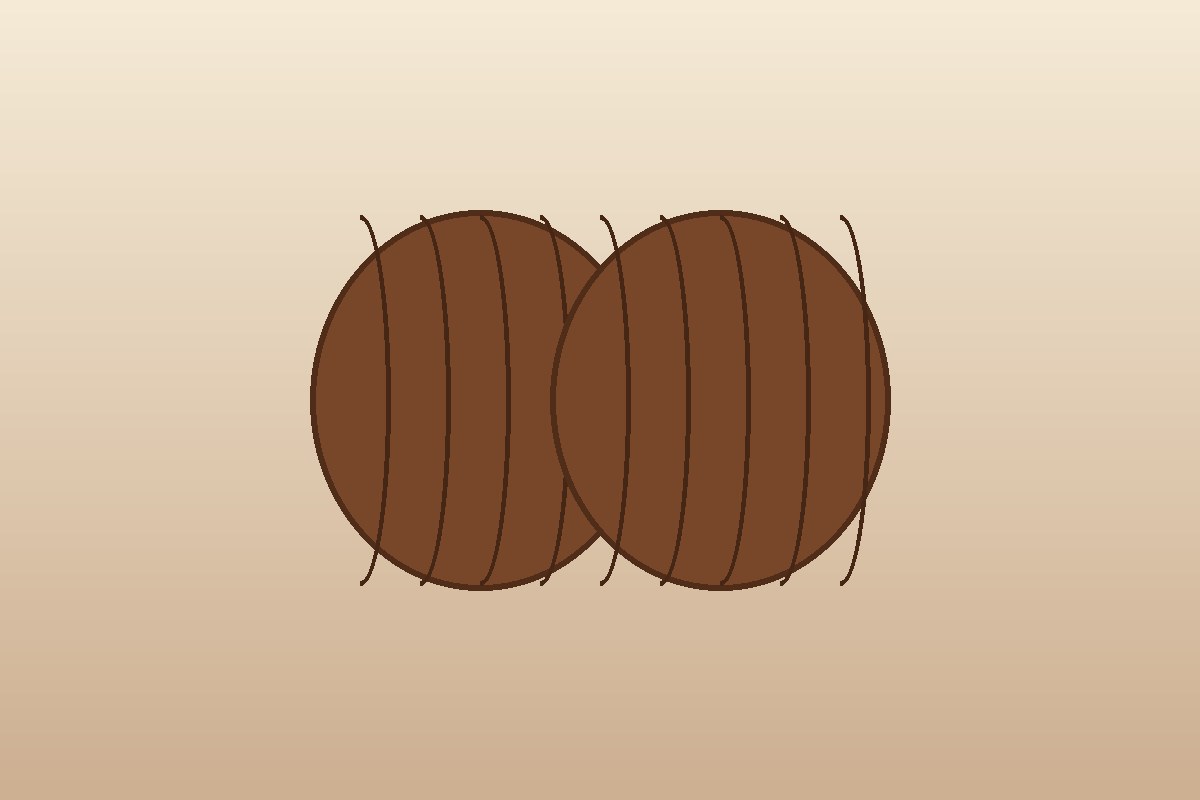
A Gauri Shankar Rudraksha is two Rudraksha seeds that grew naturally joined, read in tradition as Shiva and Parvati united. Couples and families keep it with the intention of harmony, either worn at the neck or placed in the pooja room. Because glued imitations are common, an X-ray report is the reliable check.
The Gauri Shankar Rudraksha (sacred prayer beads) is two Rudraksha beads that have grown joined together on the tree. It is one of the most distinctive beads in the tradition and one of the most imitated. This guide explains what it represents, how families traditionally keep or wear it, and how to tell a natural bead from two beads glued together.
How we write about Rudraksha: the associations below come from tradition. Many couples and families keep a Gauri Shankar bead as an object of devotion. What anyone experiences depends on many factors, differs from one household to another, and can be felt as positive, neutral or otherwise. We never promise a result, including in a marriage or relationship.
What a Gauri Shankar Rudraksha is
Occasionally two seeds of the Elaeocarpus ganitrus tree grow fused along one side, forming a single double bead. Each half has its own mukhis, the natural lines running from top to bottom. The two halves are often of unequal size, and the join is continuous with the rest of the surface. Because this happens rarely, genuine Gauri Shankar beads cost more than common beads, which is also why imitations are widespread.
What the joined beads represent
Gauri is a name of Parvati, and Shankar a name of Shiva. The bead is read as the two of them united, the divine couple, and more broadly as the joining of the masculine and feminine principles. Because of this, tradition associates the Gauri Shankar Rudraksha with:
- Harmony and understanding between partners.
- Unity within a family.
- Devotion to Shiva and Parvati together.
These are the intentions with which people keep the bead. We describe them as associations, not outcomes. A bead does not replace the work any relationship involves, and its effect, if any is felt, varies with each person and circumstance.
Wearing it or keeping it in the pooja room
A Gauri Shankar bead is used in two ways:
- Kept in the pooja room. Many families place it in a small silver or wooden holder in the pooja space, often in the north-east of the home, and include it in daily worship. Our guide to pooja room Vastu covers that space.
- Worn. It can be worn on a red thread or capped in silver or gold at the neck, sometimes with a 5 Mukhi bead on either side.
Customs commonly followed when first wearing or installing one:
- The bead is washed and kept in the pooja space overnight.
- It is first worn or installed on a Monday, often in the morning.
- Om Gauri Shankaraya Namah or Om Namah Shivaya is chanted.
- Couples sometimes keep it together in the pooja room rather than one partner wearing it.
The ritual side follows your family's tradition. We advise on placement and timing, and a muhurat consultation can choose the day and time if you want one.
Choosing a Gauri Shankar bead
Natural Gauri Shankar beads vary more than common beads. When choosing one, these points are worth considering:
- Origin. Nepal beads are usually larger with deeper mukhis. Indonesian beads are smaller and lighter, which some people find easier to wear.
- Size. A larger bead is often chosen for the pooja room and a smaller one for wearing. Size is a practical choice, not a measure of strength in the traditional view.
- Condition. Look for a bead without cracks, insect holes or damage along the join, since the join is where a natural bead is most delicate.
- Documentation. For a bead of this value, an X-ray report or laboratory certificate is reasonable to ask for.
A Gauri Shankar bead is also cared for like any Rudraksha: rinsed occasionally in clean water, kept away from soap and chemicals, and given a drop of sandalwood or mustard oil from time to time so that the seed does not dry out.
Common misconceptions
- "A Gauri Shankar bead will fix a marriage." No bead can promise that. Tradition associates it with harmony, and families keep it with that intention, but relationships depend on the people in them.
- "Both partners must wear one." This is not a rule. Many couples keep a single bead together in the pooja room.
- "The two halves must be equal." Natural beads are often unequal, and unequal halves are no cause for concern.
How to spot a glued Gauri Shankar Rudraksha
The most common imitation is two ordinary beads cut and glued together. These checks help:
- Look at the join. On a natural bead the surface texture flows across the join without a break. A straight seam, a line of adhesive or a change in colour along the join is a warning sign.
- Look at the mukhis. On a natural bead the lines on each half run naturally, and the lines nearest the join curve into it. Lines that stop abruptly at a flat face suggest cutting.
- Check the size of each half. Natural beads are often slightly unequal. Two perfectly matched halves are not proof of a fake, but they are worth a closer look.
- Be cautious of popular tests. Water, coin and milk tests do not reliably detect a glued bead, and soaking can weaken a glued joint without showing you anything.
- Ask for an X-ray report. For a Gauri Shankar bead, this is the reliable test. It shows the internal seed compartments of both halves and whether the join is natural.
Our Rudraksha collection includes the Gauri Shankar bead alongside beads from 2 Mukhi to 14 Mukhi.
Gauri Shankar and other Rudraksha beads
| Bead | Traditionally associated with | Commonly used for |
|---|---|---|
| Gauri Shankar | Shiva and Parvati united | Couples, family harmony, pooja room |
| 2 Mukhi | Ardhanarishvara | Harmony between two people |
| 5 Mukhi | Kalagni Rudra, the five elements | Daily devotion, japa mala |
The 2 Mukhi bead carries a similar association in a single seed and is often considered alongside the Gauri Shankar. The common bead is covered in our guide to the 5 Mukhi Rudraksha.
Before choosing a bead
Many families simply choose the bead that fits their devotion. Where a family would like a bead considered alongside the birth chart, including in the context of kundali matching before a marriage, a Vedic astrology consultation with Mr. Avinash Maggirwar or Mr. Abhijit Maggirwar can help, online or at our offices in Chhatrapati Sambhajinagar (Aurangabad) and Pune.
Frequently Asked Questions
What is a Gauri Shankar Rudraksha?
It is two Rudraksha seeds that grew naturally joined on the tree. Gauri is Parvati and Shankar is Shiva, so the bead is read as the divine couple united.
Who should wear a Gauri Shankar Rudraksha?
It is traditionally kept by couples and families who want to honour Shiva and Parvati together, often with the intention of harmony. What anyone experiences varies, and no result in a relationship is promised.
Can a Gauri Shankar Rudraksha be kept in the pooja room?
Yes. Many families keep it in a small holder in the pooja space, often in the north-east of the home, and include it in daily worship rather than wearing it.
How do I know if a Gauri Shankar Rudraksha is real?
Look for a join where the surface texture flows across without a seam, and mukhis that curve naturally into the join. Water and coin tests are unreliable. An X-ray report is the dependable test.
What is the difference between Gauri Shankar and 2 Mukhi Rudraksha?
A 2 Mukhi is a single seed with two lines, associated with Ardhanarishvara. A Gauri Shankar is two whole seeds naturally joined. Both are traditionally associated with harmony between two people.